
Key takeaways
- Switch to refill dispensers over a 30-day roadmap: pilot one floor before rolling out hotel-wide.
- Three things decide success: the right dispenser, a standard cleaning and refill routine, and housekeeping training.
- Never top up new product on top of what is left in the bottle. Log the batch number at every refill.
- Measure guest feedback and actual use before scaling up.
Many hotels want to move from mini bottles to dispensers to cut cost and plastic, but worry about guest reaction, housekeeping mistakes, broken or missing dispensers. Most of these risks come from switching every room at once.
Below is a 30-day roadmap a hotel can follow: start small, measure clearly, then expand.
The 30-day roadmap
Prepare and choose dispensers
Pick a pilot floor or room group. Agree on dispenser type, mounting position, products and scent. Get samples to check flow and thickness in the actual dispenser.
Install and train
Install dispensers in pilot rooms. Train housekeeping on cleaning, refilling, batch logging and fault reporting. Prepare a per-room tracking sheet.
Run and measure
Record daily use, housekeeping time on amenities, and guest feedback from reviews and front desk. Log every incident.
Review and adjust
Compare use, cost and feedback with rooms still on mini bottles. Adjust mounting, labels or refill schedule if needed.
Decide on rollout
If results meet targets, plan floor-by-floor rollout with monthly refill par levels and an order schedule.
Choosing a dispenser: 6 things to check
- Fits the bathroom style and can carry the property's logo.
- Pump delivers the right amount without dripping and suits product thickness.
- Easy to remove for cleaning, with a lock or wall bracket against theft.
- Product level is visible or easy to check during cleaning.
- Clear labels for shampoo, conditioner and shower gel, in English too.
- Spare parts available, especially pumps.
Standard cleaning and refill routine
| Step | What to do | Note |
|---|---|---|
| 1. Check | Check product level during room cleaning | Refill on schedule, don't wait until empty |
| 2. Empty | Use up or discard the remainder per internal rules | Never top up new product on old |
| 3. Clean | Wash bottle and pump, let dry completely | Use tools dedicated to amenities |
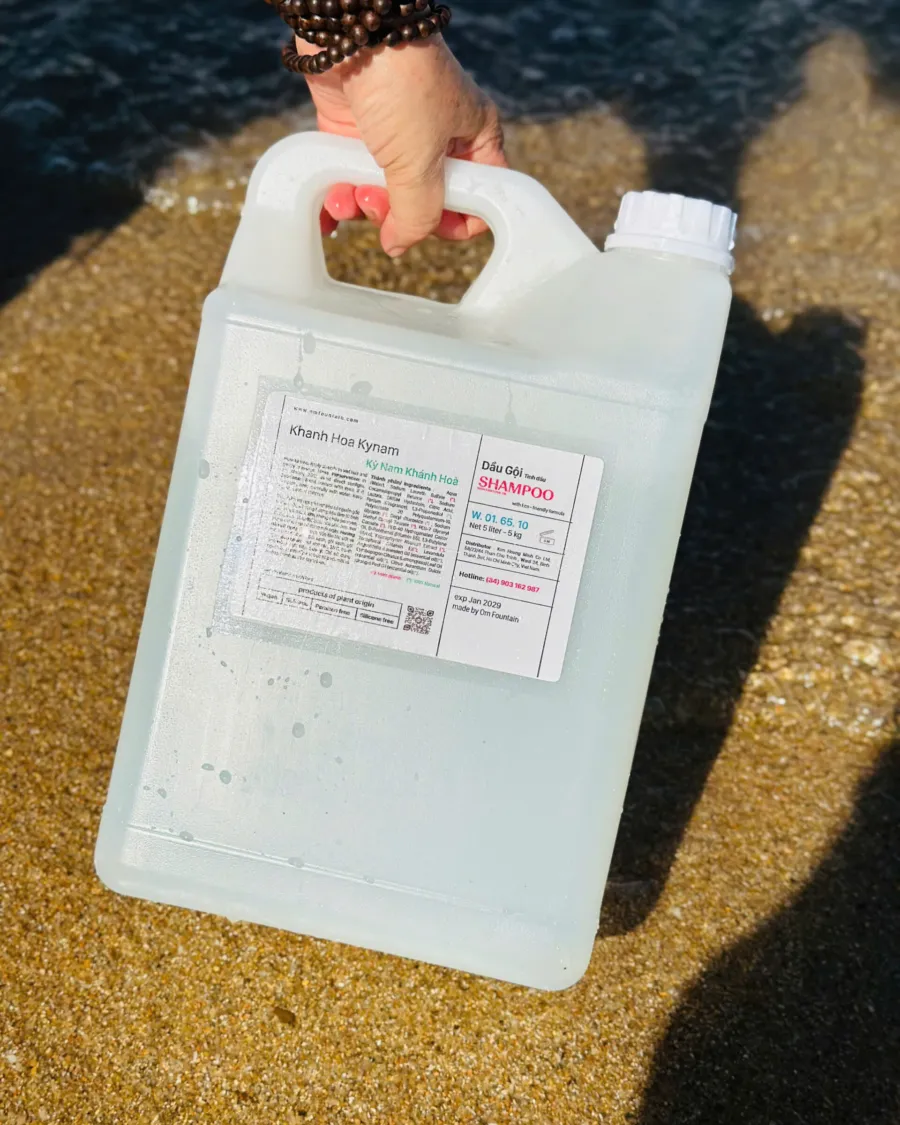
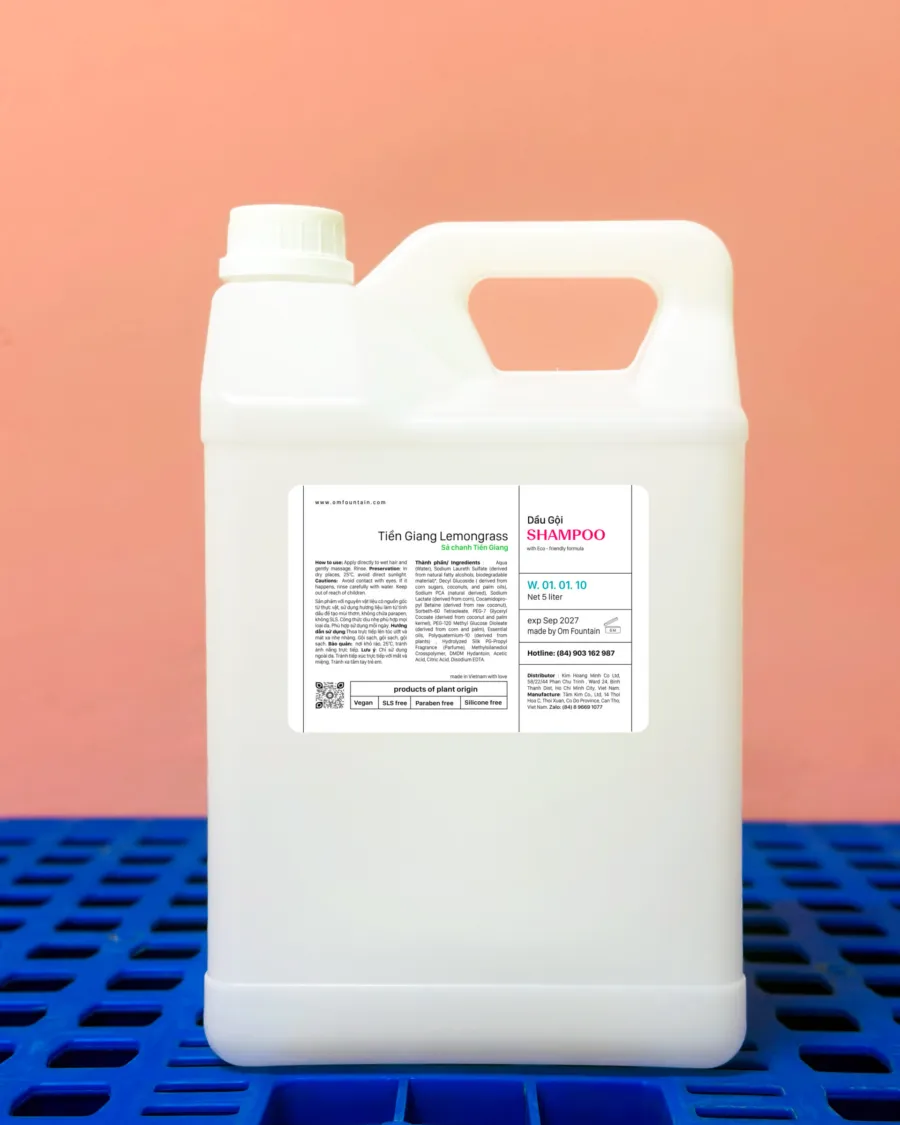
| 4. Refill | Fill from the 5 L can via a clean tap or funnel | Close the can right after pouring |
| 5. Log | Record date, room and batch number from the can | Used for traceability on feedback |
Common mistake: topping up new product on top of what is left. It makes the batch untraceable and raises hygiene risk. Empty and clean the bottle before each refill.
Housekeeping training: 4 points to make clear
- When to refill: the minimum level that triggers a refill, and the check schedule.
- How to refill: the steps in the table above, with dedicated tools.
- Logging: the form for batch number and refill date by room or floor.
- Reporting issues: broken pumps, loose dispensers, guest comments on scent or quality.
What to measure before scaling up
These three indicators are enough for management to decide. Combine them with the formula in amenity cost per room night for the full cost picture.
Start with samples: Om sends refill samples so you can test them in your existing dispensers before ordering. See how working with Om works.
Frequently asked questions
Do guests complain when hotels switch to dispensers?
Reaction depends largely on how the dispenser looks, cleanliness and product quality. Piloting one floor in week 3 shows the real response before going hotel-wide.
How do we prevent dispensers being taken or damaged?
Choose models with a lock or wall bracket, check they are secure during cleaning, and keep spare parts such as pumps on hand.
How often should dispensers be cleaned?
Before every refill, with an outside check at every room cleaning.
Should we keep mini bottles alongside?
Many properties keep some bottles for guest requests or special room types. It makes the transition smoother while still removing most of the waste.