
Key takeaways
- The price per bottle does not show the real cost. Measure cost per occupied room night.
- With mini bottles, the hotel pays for what guests leave unused, take home, or what is discarded at housekeeping.
- Dispensers with refill cans sharply cut waste, replacement labour and plastic, but need a clean refill and hygiene routine.
- You can run the numbers in about 15 minutes with 5 figures your housekeeping team already has.
When comparing amenities, most hotels put two price lists side by side and pick the cheaper bottle. It is easy, but it often leads to the wrong decision, because the biggest cost is not the purchase price. It is what happens after the bottle is placed in the bathroom.
This article gives a simple formula for amenity cost per room night, lists the items most often missed, and compares the two common options: single-use mini bottles and dispensers with 5-litre refill cans.
Why price per bottle is misleading
A mini bottle is paid for in full the moment it goes into the room, whether the guest uses all of it or only a little. At checkout, what is left can hardly be reused for hygiene and image reasons. The hotel pays for volume supplied, not volume used.
Three more costs never appear on the supplier invoice but still sit in operating costs:
The cost-per-room-night formula
Formula
Cost / room night = (Product + Waste + Packaging and dispenser depreciation + Labour + Disposal) ÷ Occupied room nights
Calculate per month or quarter. Occupied room nights = rooms × days × occupancy.
Where each figure comes from:
- Product: total value of amenities issued from the store in the period, not what was purchased.
- Waste: for mini bottles, estimate from the volume left in bottles collected during cleaning. Weighing around 30 bottles over one week gives a reliable enough ratio.
- Packaging, dispensers: dispenser cost spread over its expected months of use.
- Labour: minutes housekeeping spends on amenities per room multiplied by labour cost per minute.
- Disposal: the share of waste collection cost linked to bottles and packaging.
Mini bottles vs refill dispensers
| Criteria | Single-use mini bottles | Dispenser + 5 L refill can |
|---|---|---|
| You pay for | Volume supplied | Volume actually used |
| Waste | High: opened bottles are replaced at checkout | Low: what remains keeps being used |
| Housekeeping labour | Check and replace bottles daily | Check level, refill on schedule |
| Plastic waste | Many small bottles, hard to recycle | Little; HDPE cans are recyclable |
| Storage | Many small units, take up space | Few units, easy to count |
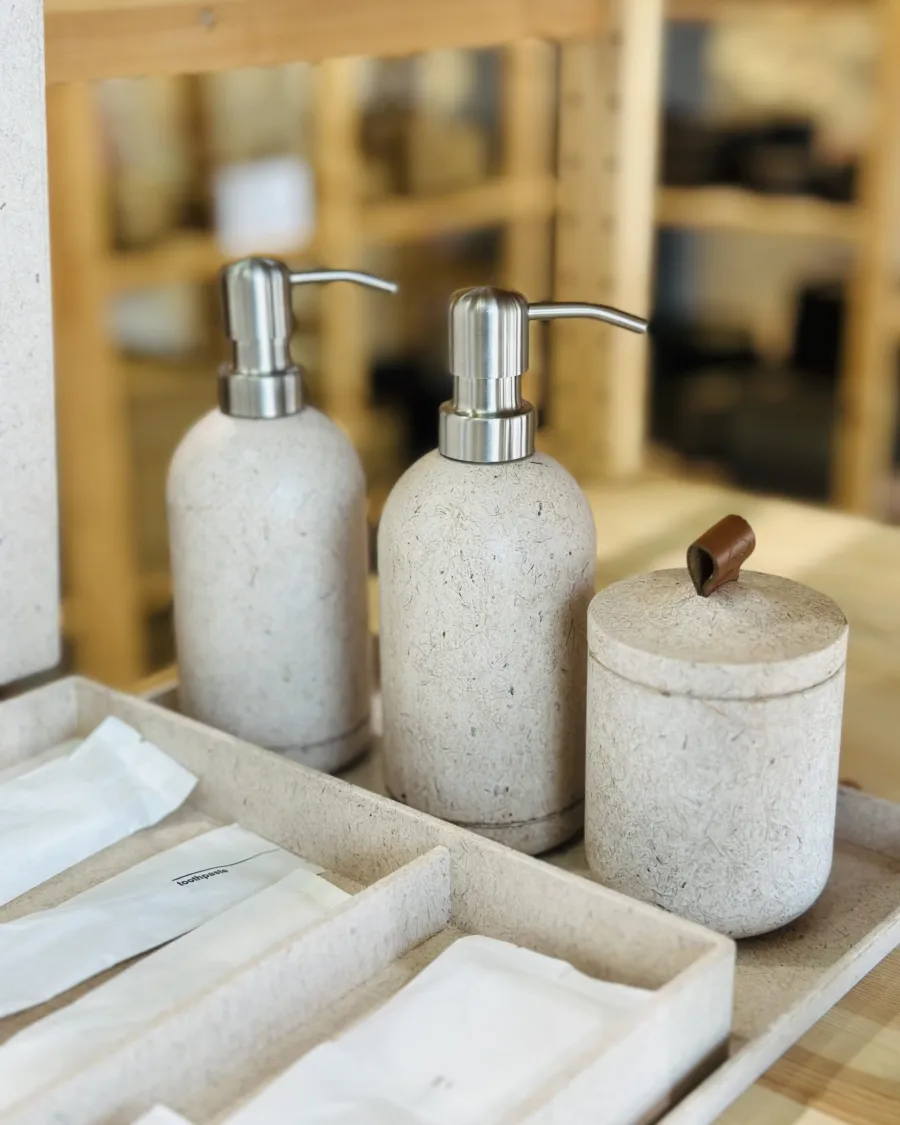
| Brand image | Logo on every bottle | Logo on dispensers, consistent bathroom look |
| What to control | Stock of many small SKUs | Hygiene, refilling and batch logging |
Worked example: paying for what guests don't use
The figures below are assumptions to illustrate the method, not data from a specific hotel.
Take a 100-room hotel at 70% average occupancy:
- Occupied room nights per month: 100 × 30 × 70% = 2,100 room nights.
- Each room night gets 3 bottles (shampoo, conditioner, shower gel), 90 ml supplied in total.
- Guests actually use about 40 ml per room night.
With mini bottles, the hotel pays for 2,100 × 90 = 189,000 ml a month, while guests use only about 84,000 ml. More than half of the volume purchased is never used. With dispensers, the hotel needs about 84,000 ml, roughly 17 five-litre cans a month.
Once replacement labour and disposal are added, the gap between the two options usually becomes even clearer.
When mini bottles still make sense
Dispensers are not the answer for every case. Mini bottles remain reasonable when:
- Group brand standards require individual bottles for each guest.
- The property positions amenities as a take-home gift and has priced this into the room rate.
- Special room types (top-tier villas) need a private experience.
Many properties combine both: dispensers for standard rooms and public areas, individual bottles for selected room types or on request.
Run the numbers for your property in 15 minutes
- Get room count and average occupancy for the last 3 months.
- Get total value of amenities issued over the same period.
- Weigh about 30 collected bottles to estimate waste.
- Ask housekeeping how many minutes per room go to amenities.
- Estimate actual use per room night.
- Put it into the formula and compare with the refill option.
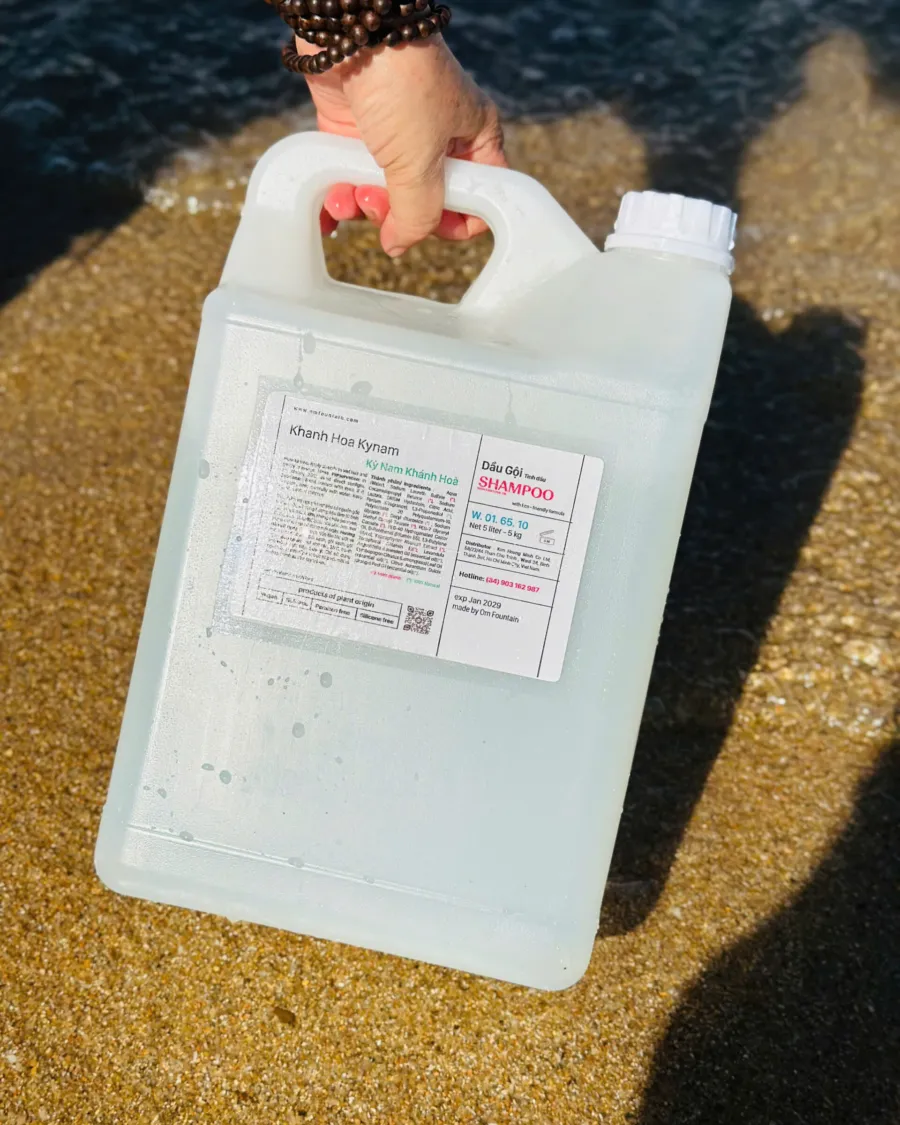
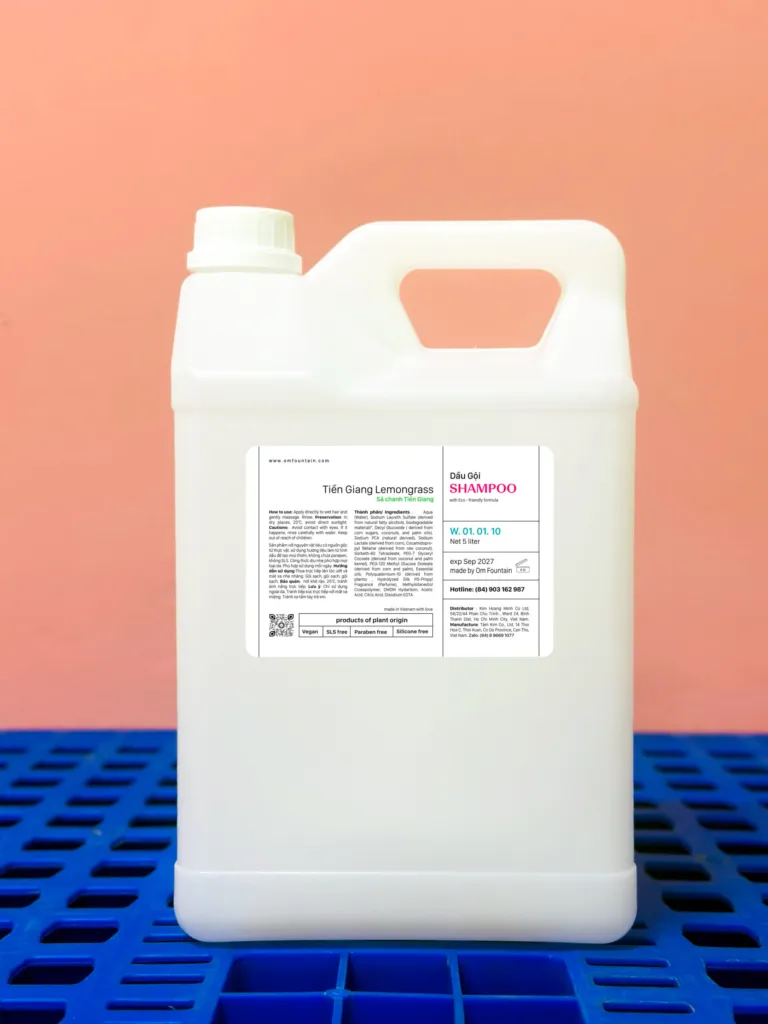
Om can run it for you: send your room count, occupancy and current amenities, and Om will estimate monthly refill volume and send samples to test in your existing dispensers. See the Heritage Line 5 L refill range.
Ready to switch? Follow the 30-day dispenser rollout and set par levels for housekeeping stock.
Run the numbers for your property: use Om Refill Planner to estimate monthly refill volume, minimum stock and order schedule in about 30 seconds.
Frequently asked questions
Do dispensers make guests rate the hotel lower?
International guests are increasingly used to dispensers in upscale hotels, especially when they are well designed, carry the property's logo and the product inside smells good. Guests notice quality and cleanliness, not bottle size.
How much is typically used per room night?
It depends on guest mix, room type and season. The most accurate way is to measure: mark dispenser levels in a few sample rooms for 2 weeks, then divide by the matching room nights.
Do we have to replace all our dispensers to switch to refill?
Not necessarily. Om sends samples so you can test them in your existing dispensers before deciding.
How long does a 5-litre can last?
It depends on room count, occupancy and use per room night. Use the formula above to work out cans per month for your property.